
Red-Eye Flights: What They Are and How to Book One
Over a million travelers a year
find flights on Laters.com

What Is a Red-Eye Flight?
A red-eye flight is an overnight flight that leaves late at night and lands early the next morning. Southwest Airlines says red-eyes “typically operate between 10 p.m. and 7 a.m. local time.” The name comes from tiredness: a short night on board can leave passengers with red, bloodshot eyes.
A red-eye is too short for a full night’s sleep. The classic US example is Los Angeles to New York: these flights leave between 9 pm and 1 am Pacific time and land between 5 am and 9 am Eastern time. The flight itself is short, but the clock moves 3 hours forward on the way east, and you lose those hours from your night.
You will also see the word spelled redeye or red eye. The busiest US red-eye routes run east from the West, or to the mainland from Hawaii and Alaska.
What Time Are Red-Eye Flights?
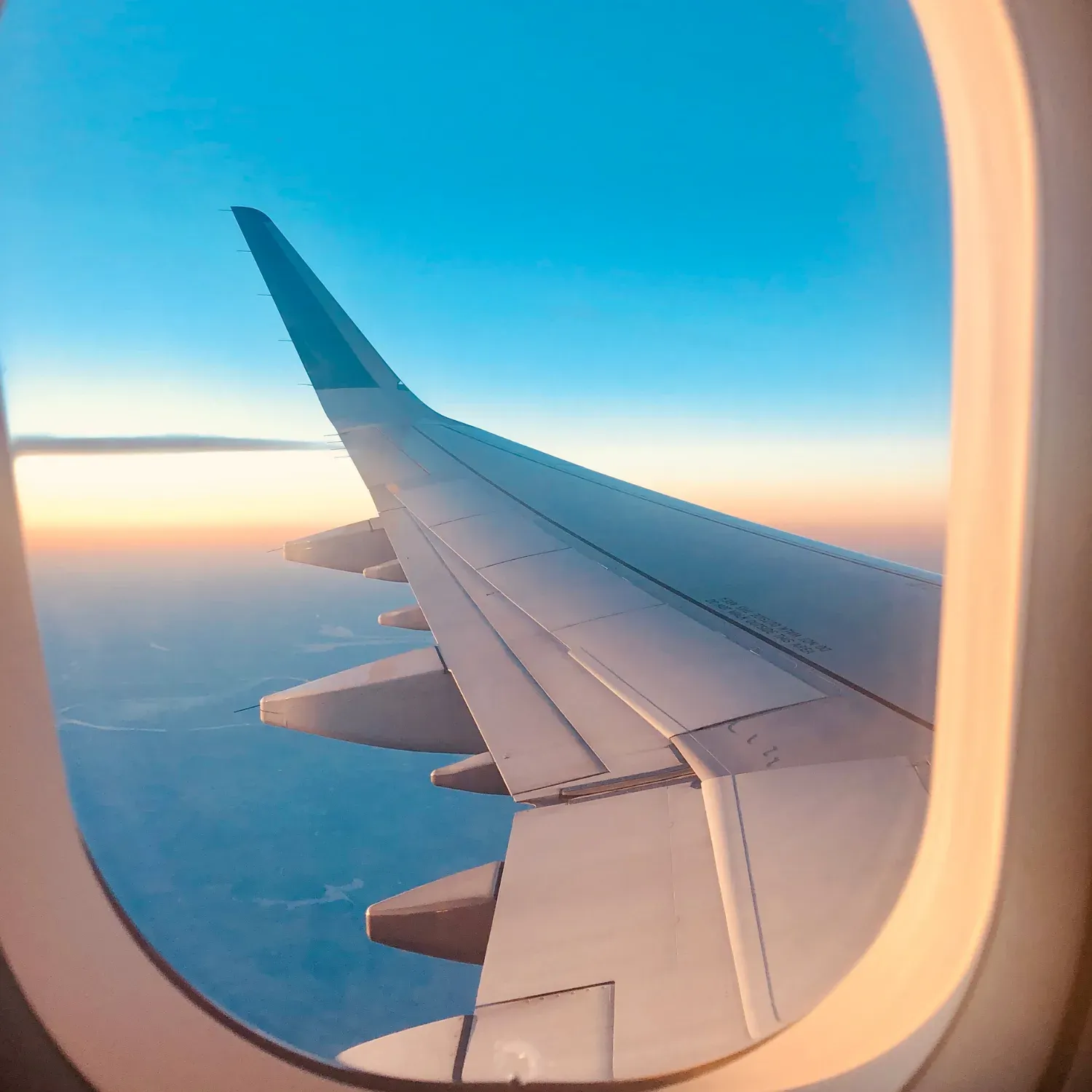
Most US red-eyes leave between 9 pm and midnight and land between 5 am and 7 am local time. In our analysis of 19,151 US red-eye flights in January and July 2026, scheduled departure times broke down like this:
- 9:00 to 9:59 pm: 21%
- 10:00 to 10:59 pm: 28%
- 11:00 to 11:59 pm: 40%
- Midnight to 1:59 am: 12%
So the most common answer to “what time is a red-eye flight?” is 11 pm. On arrival, 73% were scheduled to land between 5:00 and 6:59 am, and 92% between 5:00 and 7:59 am. The median scheduled gate-to-gate time was 4 h 48 min, and 80% of flights were scheduled for between 3 h 39 min and 5 h 40 min.
What is considered a red-eye flight depends on who is counting. Southwest uses 10 pm to 7 am. Wikipedia’s Los Angeles to New York example uses departures from 9 pm to 1 am. Our analysis counts a flight as a red-eye if it is scheduled to leave between 9:00 pm and 1:59 am local time and arrive between 4:30 am and 9:59 am local time, with a scheduled gate-to-gate time of at least 150 minutes.
Watch the date on after-midnight departures. About one in eight US red-eyes (12%) leaves between midnight and 1:59 am, which is already the next calendar day. A flight listed as 12:30 am Friday leaves late on Thursday night, so you go to the airport on Thursday evening.
Source: Laters.com analysis of US DOT/BTS on-time data, January and July 2026, US reporting carriers. These are our own calculations, not official statistics.
Are Red-Eye Flights Cheaper?
Sometimes, but not always, and the day of the week matters. NapLab compared Google Flights fares on 10 US nonstop routes in June 2026. The cheapest red-eye averaged about 8% less than the cheapest daytime flight on the same route. The difference depended on the day:
- Weekends: the red-eye was about 22% cheaper ($220 against $268).
- Weekdays: the red-eye was about 10% more expensive ($197 against $180).
This is one sample of 10 routes, so compare fares before you assume the red-eye is cheaper. To find cheap red-eye flights:
- Check weekday against weekend fares for your route.
- Compare the red-eye with the first flight the next morning. If the morning flight means paying for an extra hotel night, add the hotel to its price.
- Count the day the red-eye gives you at your destination.
Red-Eye Flight Pros and Cons
| Point | Pro or con | What the evidence shows |
|---|---|---|
| Arriving on time | Pro, with a limit | In January 2026, 83.6% of red-eyes arrived on time, against 79.2% of all flights, 74.1% of flights leaving 6:00 to 8:59 pm and 85.4% of flights leaving 5:00 to 8:59 am. In July 2026 the figures were 74.6%, 71.7%, 56.3% and 88.0%. Red-eyes were more punctual than evening flights and the daily average, and less punctual than the first flights of the morning. |
| Cancellations | Pro | 4.09% of red-eyes were canceled in January 2026, against 4.71% of all flights. In July 2026 it was 2.26% against 2.62%. |
| Fewer flights late at night | Pro | In July 2026, US airlines scheduled 6,326 departures in the 11 pm hour, against 47,716 in the 7 am hour. TSA checkpoint hours vary by airport, so check your airport’s late-night hours before you go. |
| A day saved | Pro | You travel overnight and keep the daytime for work, sightseeing or other plans. |
| Price | Mixed | In a June 2026 sample, red-eyes were cheaper on weekends and more expensive on weekdays (see above). |
| Sleep | Con | A red-eye is too short for a full night’s sleep. The median scheduled gate-to-gate time is 4 h 48 min. |
| Jet lag | Con | Most US red-eyes fly east, and the CDC says eastward travel is harder on the body clock. A Los Angeles to New York red-eye moves your clock 3 hours. |
| Food | Con | Expect snacks and drinks rather than a full meal on many domestic red-eyes. |
| Early arrival | Con | 73% of US red-eyes land between 5:00 and 6:59 am, likely hours before you can check in to a hotel. |
On time means arriving within 15 minutes of the scheduled time. The rates count only flights that arrived. Canceled and diverted flights are left out, so these figures are not comparable with the DOT’s headline on-time figures.
Source: Laters.com analysis of US DOT/BTS on-time data, January and July 2026, US reporting carriers. Price sample: NapLab, June 2026.
Book Now
Which Airlines Fly Red-Eyes?
In the US, American, United and Delta fly the most red-eyes, followed by Alaska and Southwest. US airlines scheduled 7,353 red-eyes in January 2026 (about 237 a night) and 11,798 in July 2026 (about 381 a night).
| Airline | Red-eye flights, January and July 2026 |
|---|---|
| American Airlines | 4,331 |
| United Airlines | 4,096 |
| Delta | 3,913 |
| Alaska Airlines | 2,630 |
| Southwest Airlines | 1,890 |
| JetBlue | 1,122 |
| Frontier | 949 |
| Spirit | 200 (January only) |
Source: Laters.com analysis of US DOT/BTS on-time data, January and July 2026, US reporting carriers.
Southwest is new to overnight flying. Its first red-eyes left on February 13, 2025, on five routes: Las Vegas to Baltimore/Washington, Las Vegas to Orlando, Los Angeles to Baltimore/Washington, Los Angeles to Nashville and Phoenix to Baltimore/Washington. By July 2026 it flew red-eyes daily on about 40 routes. All Southwest flights have had assigned seats since January 27, 2026, so you can choose a window seat in advance, subject to your fare.
On some red-eyes, business and first class seats convert into beds. For long-haul options such as Delta One, see our guide to airlines with lie-flat beds.

Overnight Flights Beyond the Mainland US
Across the Atlantic, eastbound flights generally operate overnight and westbound flights in the daytime. New York to London is a red-eye; London to New York is not.
From Hawaii, red-eyes fly to the mainland. Honolulu to Los Angeles is the second-busiest US red-eye route, and almost all red-eyes into Los Angeles-area airports come from Hawaii and Anchorage.
In Asia, red-eyes from Taipei and Hong Kong to Japan leave around 1 to 2 am and arrive around 6 to 7 am. Cathay Pacific added a Hong Kong to Seoul red-eye from March 2026.
A reverse red-eye is a westbound overnight flight. Southwest has scheduled one for spring 2027, from Las Vegas at 2:45 am to Honolulu at 6:10 am, with 6 h 25 min gate to gate. It is not flying yet. Hawaiian Airlines already flies Las Vegas to Honolulu with a 1:55 am departure.
Popular Red-Eye Routes
Los Angeles to New York JFK is the busiest red-eye route in the US, and San Francisco to Chicago O’Hare is also on the list. These were the 12 busiest US red-eye routes by scheduled flights in January and July 2026 combined:
| Route | Red-eye flights |
|---|---|
| Los Angeles to New York JFK | 371 |
| Honolulu to Los Angeles | 318 |
| Los Angeles to Chicago O’Hare | 286 |
| Los Angeles to Orlando | 279 |
| Anchorage to Seattle | 266 |
| San Francisco to New York JFK | 261 |
| Las Vegas to Atlanta | 245 |
| Los Angeles to Atlanta | 213 |
| Los Angeles to Boston | 203 |
| San Francisco to Atlanta | 200 |
| Las Vegas to Chicago O’Hare | 198 |
| San Francisco to Chicago O’Hare | 191 |
On Los Angeles to New York JFK in July 2026, Delta scheduled 80 red-eyes, American 62 and JetBlue 60. San Francisco to Chicago O’Hare red-eyes are flown by United and American.
Source: Laters.com analysis of US DOT/BTS on-time data, January and July 2026, US reporting carriers.
Red-Eye Flights by Destination City
Red-eye arrivals by destination, January and July 2026 combined:
| Destination | Red-eye arrivals | Where they come from |
|---|---|---|
| Florida (MCO, MIA, FLL, TPA, RSW, PBI, JAX) | 2,625 | Mostly from Los Angeles, Las Vegas and San Francisco |
| New York (JFK, LGA, EWR) | 2,579 | Mostly from Los Angeles and San Francisco; top airlines United, JetBlue and Delta |
| Chicago (ORD, MDW) | 1,660 | Mostly from Los Angeles, Las Vegas and San Francisco; top airlines United, American and Southwest |
| Atlanta | 1,422 | Delta flew 1,068 of them |
| Washington area (DCA, IAD, BWI) | 1,335 | Top airlines United and Southwest |
| Boston | 928 | Origins not broken out |
| Los Angeles-area airports | 709 | Almost all from Hawaii (HNL, LIH, OGG, KOA) and Anchorage |
| Las Vegas | 254 | All from Hawaii and Anchorage (Southwest, Alaska) |
Red-eyes into Las Vegas and Los Angeles are rare and come almost only from Hawaii and Alaska. If you are flying to either city from the East Coast or the Midwest, look at evening flights instead. For flights to Chicago, the main red-eye options leave from Los Angeles, Las Vegas and San Francisco.
Source: Laters.com analysis of US DOT/BTS on-time data, January and July 2026, US reporting carriers.

How to Book a Red-Eye Flight
- Search your route and travel date on Laters.com (650+ airlines) and look at flights that leave from about 9 pm onward.
- Check the calendar date. A departure between midnight and 1:59 am is listed on the next day, so you leave the night before the date on your ticket.
- Check the arrival time. Most US red-eyes land between 5 and 7 am, so plan how you will get from the airport and where you will go before check-in.
- Compare the red-eye with the first flight the next morning, on price and on punctuality. Early-morning flights arrived on time more often than red-eyes in January and July 2026.
- Check weekday against weekend fares. In the June 2026 price sample, red-eyes beat daytime fares on weekends but not on weekdays.
- Pick your seat. A window seat lets you lean against the cabin wall, and seats away from the lavatory get less disturbance. Southwest now assigns seats on all flights.
- Check the late-night TSA checkpoint hours at your departure airport, because they vary by airport. Our guide on how to get through airport security fast has more tips.
- At checkout, choose to pay now or pay later. The exact price for each way to pay is shown before you confirm.
Pay for Your Red-Eye Later
Laters.com charges a $0 booking fee, and there is no surcharge for paying later, so paying later costs the same as paying now. You get your e-ticket instantly.
Depending on your country, you can pay in 3, pay in 4, pay in 30 days or pay monthly. Pay later is available in 20+ countries, and there are 100+ ways to pay in total, including buy now pay later plans and cryptocurrencies.
See how fly now pay later works on Laters.com, or compare all ways to pay.
Buy Now Pay Later, Cryptocurrencies, 100+ ways to pay









How to Sleep on a Red-Eye Flight
- Choose a window seat so you can lean against the cabin wall, and avoid seats near the lavatory.
- Pack a neck pillow, an eye mask, ear plugs or noise-canceling headphones, a light blanket and any medication you need. Southwest suggests a similar kit.
- Wear breathable layers, so you can add or remove one during the flight.
- Eat lightly before you fly. Many domestic red-eyes serve snacks and drinks rather than a full meal; Southwest says “Snack and drink offerings are available on red-eye flights.”
- Keep alcohol and caffeine to a minimum. The CDC says this helps you sleep better in flight.
- Follow your usual bedtime routine to tell your body it is time to rest.
- Ask your doctor before you take melatonin. The CDC says 0.5 to 1 mg is often enough to shift the body clock and doses above 5 mg are not advised. For eastward travel, it suggests taking it about 90 minutes before bed.
- Drink water. Cabin humidity drops to 10 to 20% after about three hours of flight, which dries the mouth, throat, eyes and skin. A refillable water bottle helps.
- Walk about the cabin and flex your feet from time to time. Moving reduces blood pooling in the legs on long flights.

After You Land: Handling Red-Eye Jet Lag
Most US red-eyes land between 5 and 7 am. Plan the hours before you can check in to a hotel: where you will leave your bags, where you can rest, and when your first appointment starts.
Jet lag disorder involves crossing at least two time zones, and the CDC says eastward travel is harder. The body adapts by about 1 hour a day when you travel east and about 1.5 hours a day when you travel west. A Los Angeles to New York red-eye moves your clock 3 hours east, so at that rate full adjustment takes about three days.
- Get daylight after you land. The CDC recommends daylight at the destination after eastward travel.
- Caffeine can help you stay alert in the daytime, but stop 6 hours before bedtime.
Red-Eye Flight FAQs
Is 11 pm a red-eye flight?
Yes. An 11 pm departure that lands early the next morning is a red-eye. In our analysis of US flights in January and July 2026, 40% of red-eyes were scheduled to leave between 11:00 and 11:59 pm, more than in any other hour.
Are red-eye flights cheaper?
Sometimes. In a June 2026 sample of fares on 10 US nonstop routes, the cheapest red-eye averaged about 8% less than the cheapest daytime flight. It was about 22% cheaper on weekends but about 10% more expensive on weekdays.
Are red-eye flights safe?
US red-eyes fly under federal pilot rest rules, and those rules are stricter at night. Under FAA Part 117, the maximum flight duty period for a crew without extra relief pilots (an unaugmented crew) is 9 hours when duty starts between midnight and 3:59 am, 10 hours when it starts between 11:00 and 11:59 pm, and 11 hours when it starts between 10:00 and 10:59 pm. For duty starting between 7:00 and 11:59 am, the limit is 14 hours.
Are red-eye flights usually on time?
More often than evening flights and the daily average, but less often than early-morning flights. That was the pattern in both January and July 2026; the figures are in the pros and cons table above.
Which airlines fly red-eyes?
In the US, American, United, Delta, Alaska, Southwest, JetBlue and Frontier all fly red-eyes. American scheduled the most in January and July 2026, with 4,331.
Why is it called a red-eye flight?
Because of tired eyes. The red-eye flight meaning comes from fatigue: a short night on board can leave passengers with red, bloodshot eyes.
What is a reverse red-eye?
A reverse red-eye is an overnight flight going west. Southwest has scheduled one for spring 2027, from Las Vegas at 2:45 am to Honolulu at 6:10 am. Hawaiian Airlines already flies Las Vegas to Honolulu with a 1:55 am departure.
Can I pay for a red-eye flight later?
Yes. When you book on Laters.com, you can choose to pay later at checkout, with plans such as pay in 3, pay in 4, pay in 30 days or monthly, depending on your country. There is no surcharge for paying later and no booking fee.
Read More
Never Miss a Laters.com Flight Deal
Laters.com flight deals, BNPL promotions and flash sales, straight to your inbox.