Personal Item vs Carry-On: Sizes by Airline, Rules & What to Pack
Over a million travelers a year
find flights on Laters.com

Edited by Adinda Irawan
 Edited by
TL;DR: Distinguishes carry-ons from personal items by size and airline rules. Covers the 3-1-1 liquids rule, lithium battery/power bank limits, and a pending 2027 EU rule on personal-item size.
Carry-on vs personal item: the short answer
A carry-on is the larger bag that goes in the overhead bin, and the airline sets its size. On US airlines such as Delta and United, a carry-on can be up to 22 x 14 x 9 inches (56 x 35 x 23 cm), handles and wheels included. A personal item is a smaller bag, such as a backpack, purse, laptop bag or briefcase, that fits under the seat in front of you. There is no single personal item size: some airlines publish one, and others, including Delta and United, only say it must fit under the seat.
Rules vary by airline, cabin, fare, route and aircraft, so check your airline’s own page before you fly. The table below shows what each airline lists and where each figure comes from.

Carry-on sizes and weights by airline
A carry-on (also called cabin baggage or hand luggage) is the bag you bring into the cabin and store in the overhead bin. The 22 x 14 x 9 in size is the standard on US airlines; airlines elsewhere set their own sizes, and some, such as AirAsia, also set a weight limit. Rows marked third-party come from travel guides, not the airline’s own page, so confirm them before you pack.
| Airline | Carry-on size and weight | Personal item | Source |
|---|---|---|---|
| Delta | 22 x 14 x 9 in (56 x 35 x 23 cm), 45 in (114 cm) combined, handles and wheels included. No weight limit listed. | Must fit under the seat in front of you. No fixed size listed. | delta.com |
| United | 22 x 14 x 9 in (56 x 35 x 23 cm), 45 linear in (114 cm) combined. No weight limit listed. | Must fit securely under the seat in front of you or in the overhead bin. No fixed size on united.com; third-party guides list 17 x 10 x 9 in (43 x 25 x 22 cm). | united.com; personal item size is third-party |
| American Airlines | Check aa.com. | 18 x 14 x 8 in (45 x 35 x 20 cm) | Third-party; confirm on aa.com |
| AirAsia | One cabin bag. 7 kg combined for the cabin bag and the personal item. | One small personal item, inside the same 7 kg. | AirAsia travel advisory |
| Singapore Airlines (Economy) | One cabin bag, up to 115 cm combined and 7 kg. | Check singaporeair.com. | Third-party; confirm on singaporeair.com |
| Emirates (Economy) | One carry-on, up to 55 x 38 x 20 cm and 7 kg. | Check emirates.com. | Third-party; confirm on emirates.com |

Personal item sizes, and whether a backpack counts
A personal item is a smaller bag that fits under the seat in front of you, such as a backpack, purse, laptop bag or briefcase. It is separate from your carry-on and has its own limits, but not every airline puts a number on them:
- Delta: an item that fits underneath the seat in front of you. No size given.
- United: it must fit securely under the seat in front of you or in the overhead bin. No size on united.com; third-party guides list 17 x 10 x 9 in (43 x 25 x 22 cm).
- American Airlines: 18 x 14 x 8 in (45 x 35 x 20 cm), according to third-party guides.
- AirAsia: one small personal item, which counts toward the 7 kg combined cabin limit.
Does a backpack, tote or laptop bag count?
Yes, if it fits. If your airline publishes a personal item size, measure the bag when it is packed and compare it with that size. If the airline gives no size, the test is whether the bag fits fully under the seat in front of you. A bag that does not fit there is not a personal item, so check it against the carry-on size instead.
Water bottles and snacks
Snacks can go in your personal item. Solid foods are generally fine at US security, but spreads count as liquids. Bring a reusable water bottle empty, because a full bottle over 3.4 oz (100 ml) does not meet the liquids rule. Pack the bottle inside your bag rather than carrying it separately.
What to pack where
Carry-on (overhead bin):
- Clothes for 1-2 days, a jacket or scarf, and backup shoes
- Travel-size toiletries (100 ml or less each), such as toothpaste and deodorant, and a travel-size laundry kit
- Tech you won’t need during the flight, such as a camera or gimbal
- High-value items you don’t want in checked baggage, such as camera lenses
- Non-perishable snacks and an empty reusable water bottle
Personal item (under the seat, within reach):
- Passport, visas, boarding pass and wallet
- Medication, jewelry and other valuables
- Phone, laptop or tablet, chargers and headphones
- Comfort items: eye mask, neck pillow, socks, lip balm, hand sanitizer, a book
- Snacks for the flight and baby supplies
- Duty-free purchases, following your airline’s rules
A laptop can go in either bag. For screening and battery rules, see can you bring a laptop on a plane.
Liquids at security: the 3-1-1 rule
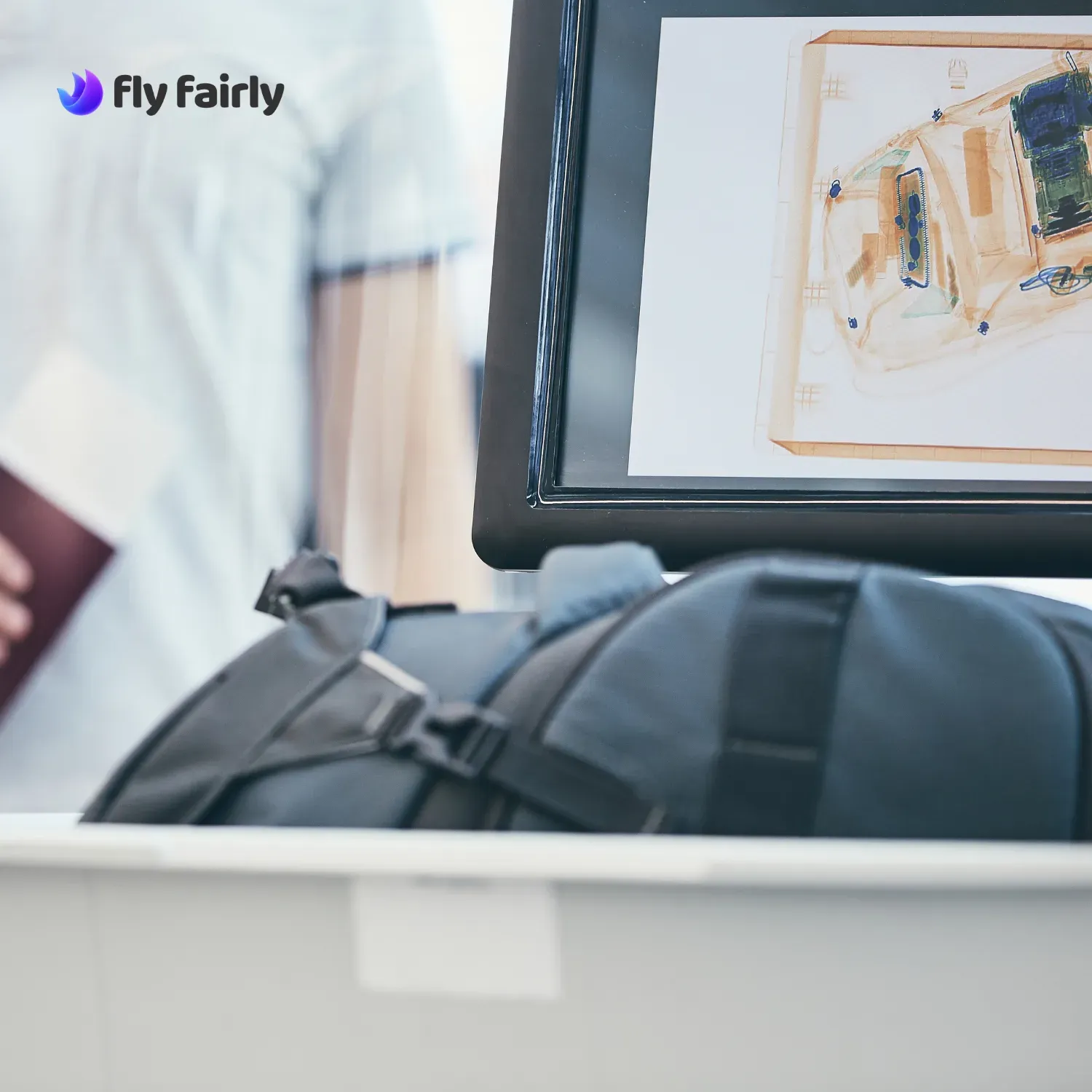
For flights from the US, the TSA allows liquids, gels, creams, pastes and aerosols in your carry-on in containers of 3.4 oz (100 ml) or less. All of them must fit in one quart-size bag. At screening, take that bag out of your carry-on and keep it separate.
Medications and infant and child nourishment, such as baby formula and breast milk, are exempt from the 3.4 oz limit. Tell the officer about them at screening. Many airports outside the US use a similar 100 ml limit, but check the rules where you depart. The full exemption list is on the TSA liquids rule page.
For more on getting through screening, see our airport security tips for 2026.

Power banks and batteries
- Spare lithium batteries and power banks go in carry-on bags only, never in checked bags. Protect the terminals and keep them where you can reach them.
- If your carry-on is checked at the gate, take spare batteries and power banks out and keep them with you.
- Up to 100 Wh: the FAA sets no quantity limit.
- 101-160 Wh: you need airline approval, and you can carry at most two spare batteries per person.
- Airlines may set stricter limits than the FAA.
Source: FAA PackSafe: lithium batteries. For laptops and other devices, see flying with a laptop.
Weight limits: set by each airline
There is no common carry-on weight limit. Each airline sets its own, and some list none:
- Delta and United: their carry-on pages list no weight limit.
- AirAsia: 7 kg in total for the cabin bag and the personal item together.
- Singapore Airlines and Emirates (Economy): 7 kg for the cabin bag, according to third-party guides.
If your bag is too big or too heavy
AirAsia says excess cabin baggage must be checked at the counter, or it may be checked at the gate. Before any bag goes in the hold, take out spare batteries and power banks. If you need checked baggage, compare airlines that include free baggage. Questions about baggage and seats on a Laters booking are answered in our FAQ.
EU rules: agreed, and when they apply
The EU reached a political agreement on revised air passenger rights on 15 June 2026, according to the European Commission. Reports say Parliament approved the text on 7 July 2026 and the Council gave final approval on 13 July 2026. The regulation was reported as published in the Official Journal on 2 October 2026 as Regulation (EU) 2026/2202. The Commission says the rules apply 12 months after adoption and publication, so they would apply from about late 2027.
Reports of the final text say a personal item stays free: 40 x 30 x 15 cm, or a bag that fits under the seat in front of you. Check the exact wording in the Official Journal. The agreement also makes hand baggage charges clearer when you compare fares, and airlines keep control of their own pricing. Until the final wording on cabin bags is confirmed, do not assume a cabin bag is free on every ticket.
For the rest of the EU rules, read our guide to air passenger rights.
Myths vs facts
- Myth: the TSA decides carry-on size. Fact: airlines set bag sizes; the TSA sets security rules, such as the liquids limit.
- Myth: any backpack counts as a personal item. Fact: it counts only if it fits fully under the seat or within your airline’s personal item size.
- Myth: power banks can go in checked luggage if they are switched off. Fact: spare lithium batteries and power banks must travel in your carry-on.
Smart packing tips
- Measure both bags at home, packed, and compare them with the sizes your airline lists.
- Use packing cubes. They keep your bags organized and save space.
- Keep what you need during the flight, such as snacks or headphones, in your personal item.
- Watch the weight. If your airline lists a limit, such as AirAsia’s 7 kg combined, weigh your bags before you leave to avoid excess baggage fees.
Pay later for the flight
With Laters you can pay later for flights on 650+ airlines, with a $0 booking fee. The price you see includes all taxes, service charges and booking fees, and there is no surcharge for paying later. Choose from 100+ ways to pay, in full or later, then pack to your airline’s sizes.
Buy Now Pay Later, Cryptocurrencies, 100+ ways to pay










Frequently Asked Questions
What’s the difference between a carry-on and a personal item?
A carry-on goes in the overhead bin; on Delta and United it can be up to 22 x 14 x 9 in (56 x 35 x 23 cm), handles and wheels included. A personal item is a smaller bag, such as a backpack, purse or laptop bag, that fits under the seat in front of you. Sizes vary by airline, so check yours before you pack.
What size can a personal item be?
It depends on the airline: Delta and United publish no fixed size and say it must fit under the seat in front of you (United also allows the overhead bin). Third-party guides list American Airlines at 18 x 14 x 8 in (45 x 35 x 20 cm) and United at 17 x 10 x 9 in (43 x 25 x 22 cm), so confirm these on the airline’s site.
Does a backpack count as a personal item?
Yes, if it fits fully under the seat in front of you, or within your airline’s personal item size when it publishes one. If it is bigger, it is not a personal item, so check it against the carry-on size instead.
Can I bring a laptop in my cabin baggage?
Yes. A laptop can go in your carry-on or your personal item, and a laptop bag can be your personal item. For screening and battery rules, see flying with a laptop.
What’s the liquids rule for flights from the US?
Under the TSA’s 3-1-1 rule, liquids, gels and aerosols must be in containers of 3.4 oz (100 ml) or less, all in one quart-size bag that you take out of your carry-on for screening. Medications and infant and child nourishment are exempt from the 3.4 oz limit; tell the officer at screening.
Are power banks allowed on a plane?
Yes, in carry-on bags only, never in checked bags; if your carry-on is checked at the gate, take them out and keep them with you. Spares of 101-160 Wh need airline approval, with a maximum of two per person, and airlines may set stricter limits than the FAA.
I’m flying AirAsia, Singapore Airlines or Emirates. What are the cabin limits?
AirAsia allows one cabin bag and one small personal item, 7 kg combined, and excess must be checked at the counter. Third-party guides list Singapore Airlines Economy at one cabin bag up to 115 cm combined and 7 kg, and Emirates Economy at one carry-on up to 55 x 38 x 20 cm and 7 kg. Confirm these on the airline’s site for your fare and route.
Is the EU making cabin bags free?
Not in a way you can count on yet. The EU agreed new air passenger rules in June 2026, reported as published in October 2026 and applying from about late 2027, and reports say a personal item stays free. The final wording on cabin bags still needs checking and airlines keep control of their own pricing, so check your airline’s current hand baggage policy.
Read More
Find Cheap Last-Minute Flights – Book Now! | Best Deals on Flights
The Ultimate Guide to Booking Red-Eye Flights
Boeing 777 Flights: Airlines, Routes, and Travel Info
Traveling with Multiple Airlines: A Complete Guide
Plan Your Perfect Multi-Stop Trip
Never Miss a Laters.com Flight Deal
Laters.com flight deals, BNPL promotions and flash sales, straight to your inbox.