
How Much Cash Can You Fly With?
No limit on the cash you travel with, but more than $10,000 must be declared when you enter or leave the US
Over a million travelers a year
find flights on Laters.com

Edited by Adiatma Sukwirahmanta
 Edited by
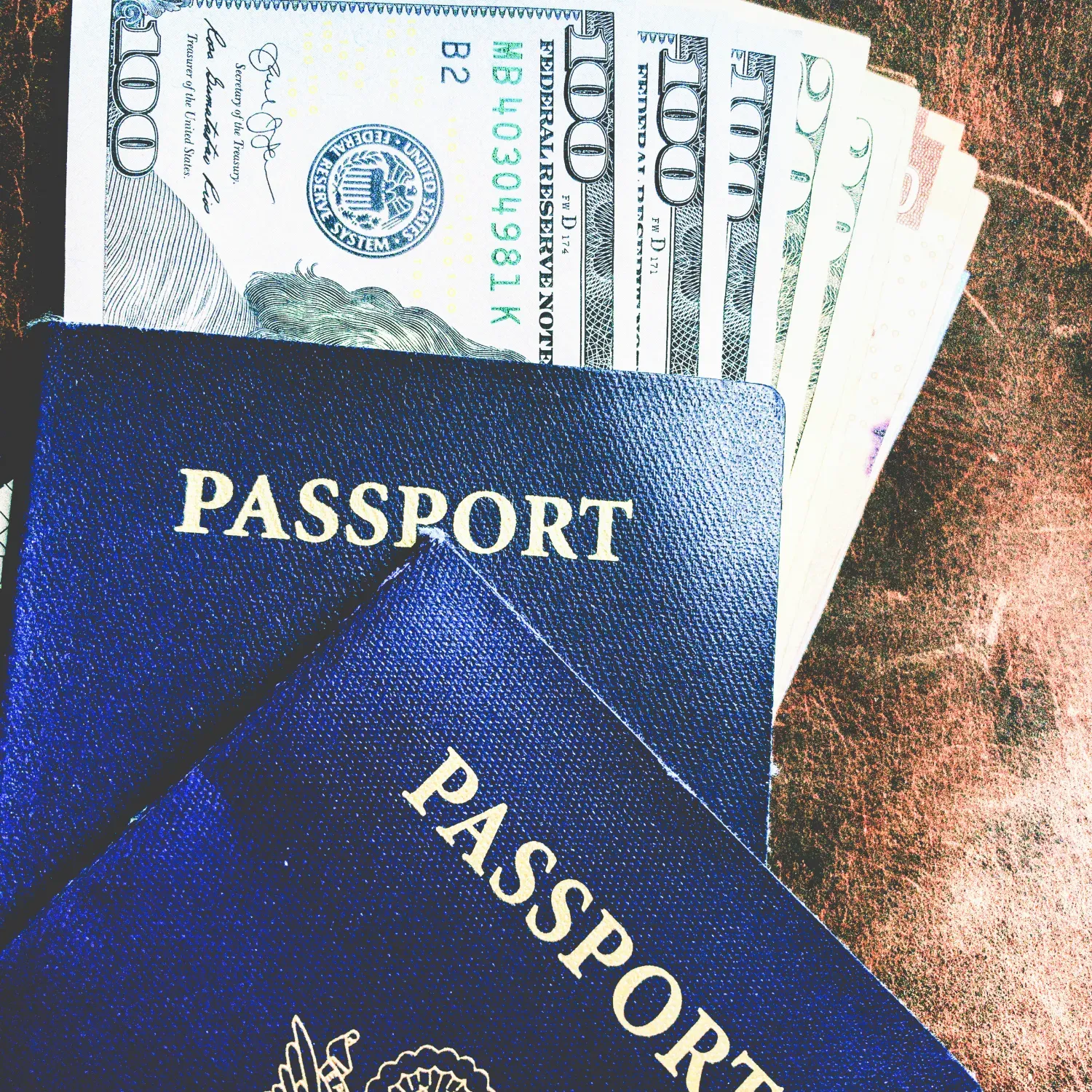
TL;DR: No legal limit on cash flown with, but amounts over $10,000 entering/leaving the US must be declared via FinCEN Form 105, with steep penalties for non-disclosure. Compares UK/EU/Canada thresholds and gives safety tips.
Yes, you can fly with cash: the short answer
Yes, it’s legal to fly with cash, both domestically and internationally. There is no limit on the amount of money you can travel with, according to the US government’s travel money guide at usa.gov.
What the law does require is a report for large amounts. If you carry more than $10,000 in cash or monetary instruments into or out of the US, you must declare it to U.S. Customs and Border Protection (CBP) on FinCEN Form 105. A family or group traveling together counts its cash as one total.
Large amounts can also draw questions at the airport, so it helps to know the rules before you pack.
How much cash can you carry on a plane in the US?
There is no set amount. usa.gov says there is no limit on the money you can travel with, and the $10,000 reporting rule applies when you enter or leave the US. TSA’s What Can I Bring? list has no entry for cash, so the list sets no limit on the cash you bring or take on a plane.
Carrying a lot of cash can still lead to questions. A TSA officer who finds a large amount may call law enforcement, and you may be asked to explain where the money came from and what it is for.
Our advice: keep the cash on your person or in your carry-on bag, never in checked luggage. For the rest of your bag, see what you can bring in your cabin baggage.
When you must declare cash on an international flight
The US threshold is more than $10,000 in currency or monetary instruments, counted when you enter or leave the country. Exactly $10,000 needs no report.
Families and groups count one total
According to CBP, when a family or group travels together, the $10,000 threshold applies to their combined total, not to each person. For example, if four people traveling together carry $3,000 each, the group has $12,000 and must declare it.
Other countries do not all work this way. The EU applies its limit to each person, while the UK counts a family or group together. The country rules are below.
How to file FinCEN Form 105, and what happens if you don’t
FinCEN Form 105 is the Currency Reporting Form. CBP gives you these options:
- File online on the FinCEN Form 105 website. CBP recommends this.
- Print the paper form and fill it in before you travel.
- Ask a CBP officer for a paper form.
You can complete the form before departure or on arrival.
Penalties for not reporting
usa.gov lists these penalties for failing to report, or reporting fraudulently:
- Confiscation of all the currency or monetary instruments, not just the amount over $10,000
- A fine of up to $500,000
- Up to 10 years in prison
CBP says that if you fail to file, your currency can be seized and forfeited, and in some cases you can face civil or criminal penalties.

What counts as cash for a declaration
For the US declaration, cash means more than paper money. CBP counts:
- Coins and banknotes
- Traveler’s checks in any form
- Checks, money orders, promissory notes and securities that are in bearer form or endorsed without restriction
A check made out to a named person and not endorsed generally does not count.
Add all of these together. If the total is more than $10,000, you must report it when you enter or leave the US.

What TSA and law enforcement can do with large amounts of cash
TSA screens passengers and bags for security threats. If a TSA officer finds a large amount of cash, the officer may call law enforcement. Seizing cash is a matter for law enforcement or CBP, under the currency reporting rules or under forfeiture law.
Civil forfeiture can happen without a criminal charge. The US Department of Justice says civil judicial forfeiture requires no criminal conviction. The government must prove, by a preponderance of the evidence, that the property was linked to criminal activity.
Example: a family at Washington Dulles
On June 1, 2026, CBP reported a case at Washington Dulles International Airport. A man and his wife first told officers they had $7,000 each. They then reported a combined $20,000, verbally and in writing, and the form listed $22,500. Officers counted $46,520. CBP seized the currency, and the family was released without criminal charges.
Our advice: carry proof of where your money came from, such as bank withdrawal slips, invoices or business records. If officers question you, stay calm and cooperative, and give accurate amounts.
Cash rules for the UK, EU and Canada
Many countries set their own declaration rules for travelers entering or leaving with cash. The details differ, including whether a family’s cash counts as one total.
| Country | Declare when you carry | Family or group | If you don’t declare |
|---|---|---|---|
| United States | More than $10,000, entering or leaving | Combined total | All cash can be confiscated; fine up to $500,000; up to 10 years in prison |
| UK: Great Britain | £10,000 or more, to or from a country outside the UK | Combined total | All cash can be seized; penalty of up to £5,000 to get it back |
| UK: Northern Ireland | €10,000 or more, to or from a non-EU country, or arriving from Great Britain | Combined total | All cash can be seized; penalty of up to £5,000 to get it back |
| European Union | €10,000 or more in cash (or equivalent), entering or leaving the EU | Each person individually | Cash may be detained; penalties may apply |
| Canada | CAN$10,000 or more, in Canadian or foreign currency or a combination of both | See CBSA guidance | All currency can be seized; it may be returned after a penalty is paid |
United Kingdom
According to GOV.UK, if you do not declare cash you should have, a Border Force officer can seize all the cash you are carrying. Border Force can keep it for 48 hours; after that, it needs a court order. The UK list of cash includes bearer bonds and traveler’s checks.
European Union
The EU’s Your Europe guide says customs can also act on smaller sums when there are signs of criminal activity. Cash under the EU rule includes bearer negotiable instruments, gold coins of at least 90% gold, and gold bullion of at least 99.5% gold.
Canada
The Canada Border Services Agency (CBSA) can seize all your currency and monetary instruments if you do not report the entire value.
For Australia and every other country, check your destination country’s customs website or speak with your airline to confirm the requirements before you travel.
Protect your cash and keep proof of where it came from
These are our tips, not legal rules:
- Keep cash in your carry-on or on your person, never in checked luggage.
- Use a money belt or a concealed pouch.
- Use a sturdy, tamper-proof carry-on bag.
- Don’t show or count cash in public.
- Split large sums between different safe places.
- Keep documents that show where the money came from, such as bank withdrawal slips, invoices or business records.
- Be ready to explain the purpose of the funds if officers ask.
To plan for the checkpoint, read how to get through airport security faster.

Before you travel
- Add up the cash and monetary instruments your whole party is carrying. In the US and the UK, a family or group counts together; in the EU, each person counts separately.
- If the US total is more than $10,000, file FinCEN Form 105 online before you fly, or complete a paper form before departure or on arrival.
- Check the rules of both your departure and destination countries.
- Pack proof of where the money came from.
- Keep the cash in your carry-on or on your person. If you also travel with electronics, check whether you can bring a laptop in your carry-on.
Still need a ticket? Laters lists flights on 650+ airlines with a $0 booking fee, and you can fly now, pay later. See all the ways to pay or compare payment plans for flights.
Buy Now Pay Later, cryptocurrencies and many more ways to pay








Frequently Asked Questions
Can I fly with $50,000 in cash domestically?
Yes. usa.gov says there is no limit on the amount of money you can travel with. Officers may ask about a large amount, so carry proof of where the money came from.
Is there a TSA cash limit per person?
No. TSA’s What Can I Bring? list has no entry for cash. A TSA officer who finds a large amount may call law enforcement.
Do I have to declare cash under $10,000 when flying internationally?
Not in the US: you declare only when you carry more than $10,000, so exactly $10,000 needs no report. If you travel with family or a group, add up everyone’s cash first, because the US threshold applies to the combined total.
Does the $10,000 limit apply per person or per family?
What form do I need to declare cash over $10,000?
FinCEN Form 105, the Currency Reporting Form. CBP recommends filing it online; you can also print a paper form or get one from a CBP officer, and complete it before departure or on arrival.
What happens if I don’t declare cash over $10,000?
According to usa.gov, failing to report or reporting fraudulently can lead to confiscation of all the currency, a fine of up to $500,000 and up to 10 years in prison. CBP says failing to file risks seizure and forfeiture of the currency, and in some cases civil or criminal penalties.
Can my money be taken if I don’t break the law?
It can. The US Department of Justice says civil judicial forfeiture requires no criminal conviction; the government must prove, by a preponderance of the evidence, that the property was linked to criminal activity. Documents that show where the money came from help you answer questions.
Never Miss a Laters.com Flight Deal
Laters.com flight deals, BNPL promotions and flash sales, straight to your inbox.